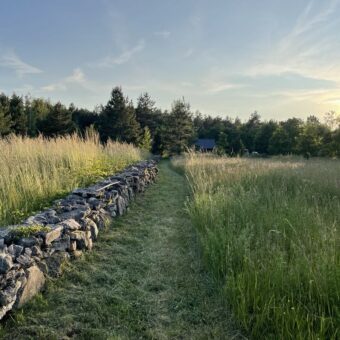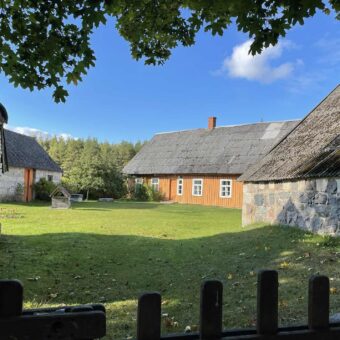
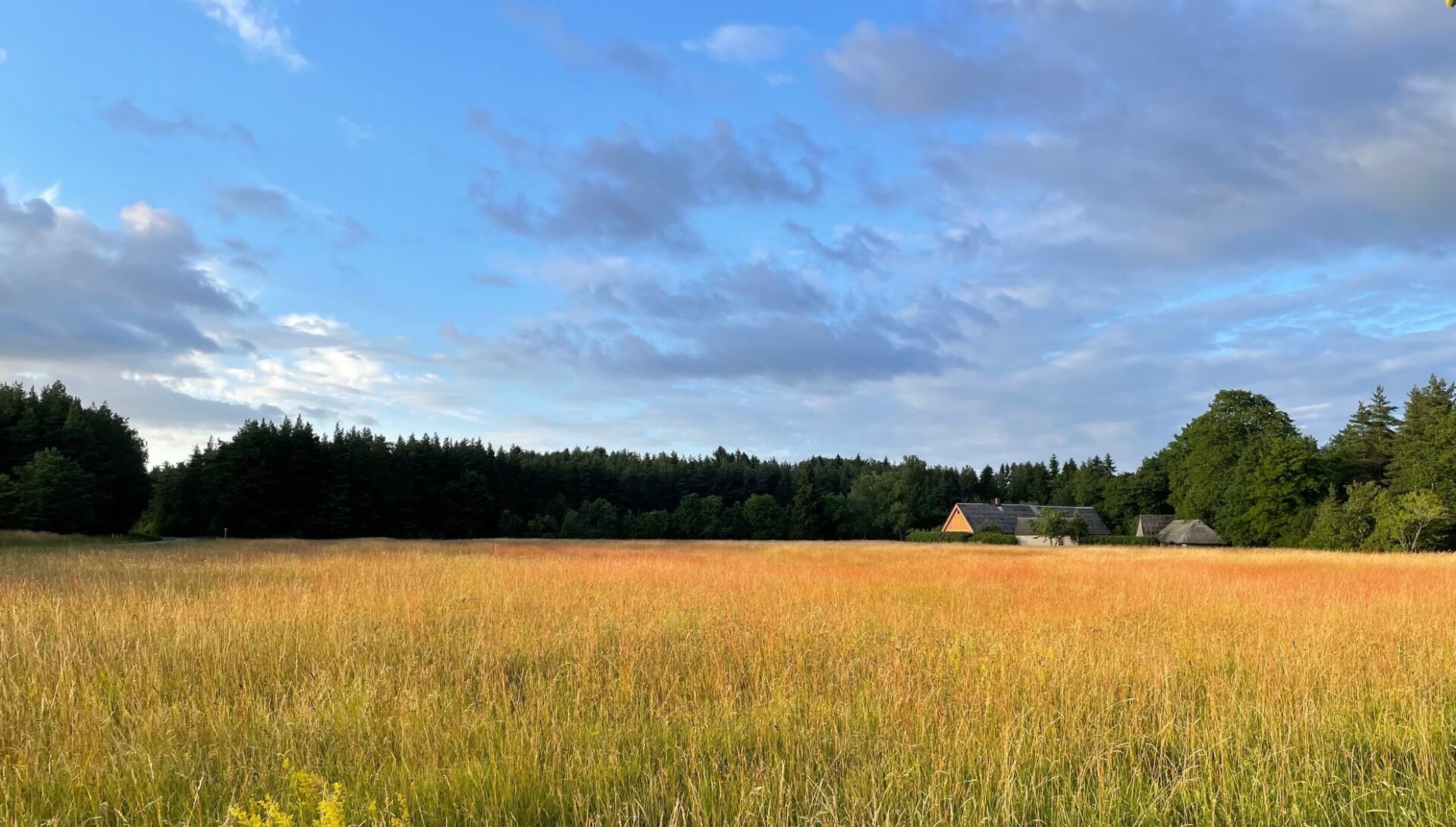
Hidden among the junipers and stone fences of Muhu Island lies a farm that has witnessed more than 140 years of Estonian history.
Founded in 1885 by Mihkel Tuulik and his wife Ingel, Saadu Farm has remained in the same family through prosperity and hardship, war and peace, independence and occupation.
Today it has become a small museum where authentic buildings, family heirlooms and personal memories preserve the everyday life of Muhu people.
Every visitor discovers not only a farm—but a family’s journey through history.
Generation after generation, the family rebuilt, repaired and protected their home.
The farm grew with new buildings—a granary, barn, cellar, smithy and the famous windmill built in 1925.
Although the original windmill disappeared in the 1960s, its story remains one of the symbols of Saadu Farm.
Muhu Traditions Live Here
The museum presents more than architecture.
Visitors discover
• traditional Muhu farming
• handicrafts and embroidery
• island architecture
• family photographs
• original household objects
• stories passed from generation to generation
Today the museum continues preserving the cultural heritage of Muhu for future generations.
The Tuuliku–Saadu Farm Museum (1885–2025): The Story of One Family and Estonia’s History
On the western Estonian island of Muhu, in the village of Levalõpme, stands the Tuuliku–Saadu Farm, today home to the Tuuliku–Saadu Farm Museum. It is more than a collection of historic buildings. It shows how the story of one ordinary farming family became connected with the wider history of Estonia. For more than 140 years, the farm has witnessed the national awakening, two world wars, occupations, collectivisation, the restoration of independence, and the revival of rural heritage.
The story begins long before the farm itself was founded. In the mid-19th century, the Männiku-Jüri family lived in Levalõpme. The family patriarch, Jüri Tulik (1811–1865), and his wife Riste raised nine children during a period of profound change in Estonia. Agricultural reforms gradually freed peasants from feudal obligations and gave them the opportunity to own land. These reforms created opportunities that shaped the family’s future.
Building a New Home (1885–1900)
Saadu Farm was founded by Mihkel Tuulik (1854–1922). After marrying Helena (Ingel) Tarvis in 1878, the young couple moved from the old Männiku-Jüri farm to a newly established holding known as Saadu. During the first years, they built the main buildings that still define the historic farm today.
The first combined smithy, sauna, drying house and summer kitchen was built in 1885–1886. A granary was built in 1887–1888, and by 1890 the family had added a cellar and a storage building. These buildings reflected the determination of a young family to build its future as Estonia entered the difficult period of Russification under the Russian Empire.
Although political life around them was changing, daily life at Saadu centred on farming, livestock, and family. Like most farms in Muhu, it was largely self-sufficient and closely connected to the island’s traditions.
Growing Through Changing Times (1900–1939)
Mihkel and Ingel raised ten children.
After Estonia became independent in 1918 and the land reform took place, Saadu entered a new era. After his father’s death in 1922, Villem Tuulik inherited the farm. He married Ingel Väärtnõu in 1923 and devoted himself to improving the property.
The 1920s were one of the farm’s most prosperous decades. A large barn was completed in 1920, a traditional windmill was erected in 1925, and several children were born into the family: Vaike (1925), Hilda (1929), Salme (1931), Helju (1934) and Vello (1938). In 1935 Villem enlarged the farmhouse, creating additional living space for the growing family. By 1939, the farm covered more than 16 hectares of fields, meadows and pasture, supporting the family through mixed farming.
War and Occupation (1940–1960)
The Second World War brought major changes. Estonia was occupied first by the Soviet Union, then Nazi Germany, and again by the Soviet Union in 1944. Muhu became part of military operations in the Baltic Sea, and many island families experienced uncertainty, separation and loss.
The Tuulik family was affected as well. Some relatives escaped to Sweden, while others remained on the island. During Soviet collectivisation, the independent farm economy disappeared. Like many Estonian farmers, the family had to adapt to the collective farm system while trying to preserve their home and traditions.
Despite political pressure, Saadu remained inhabited. Farm records from 1942 show a modest but functioning household with fields, livestock, and a family determined to maintain a normal life in difficult circumstances.
Keeping the Farm Alive (1960–1991)
After Villem’s death in 1961, responsibility for preserving the family home passed to the next generation. The family had to make difficult practical decisions. In 1965, because building materials were unavailable, the old windmill was dismantled so its timber could be used to repair the farmhouse roof. Although the mill disappeared, the family managed to preserve the house.
During the Soviet period, Hilda and Helju continued to live at Saadu. Helju became well known for making traditional handicrafts through the UKU handicraft cooperative, while Hilda worked as a mathematics teacher. Their brother Vello, an engineer educated at Tallinn Polytechnic Institute, regularly returned to Muhu with his own family during the summers, maintaining the family’s close connection with their ancestral home.
Even under Soviet rule, the farm remained an important meeting place where family memories and Muhu traditions were passed from one generation to the next.
A New Beginning After Independence (1991–2025)
The restoration of Estonia’s independence in 1991 opened a new chapter. Property reforms allowed families to regain control of their ancestral land, and Saadu once again became a privately managed family farm.
During the following decades, the family continued to maintain and restore the farm. Buildings were repaired, the granary received a new roof, and the family’s history was carefully documented. As older family members passed away—Hilda in 2012, Vello in 2019, Helju in 2024, and Salme in 2025—the responsibility for preserving the family heritage passed to younger generations.
By 2025, exactly 140 years after its foundation, Saadu Farm had become the Tuuliku–Saadu Farm Museum. The museum does more than display historic objects. It tells the story of a real family whose experiences reflect the wider history of Estonia. Visitors can discover historic buildings and traditional farming life, as well as the strength of generations who lived through wars, occupations, and political change while remaining deeply connected to their home.
Today, the museum represents both Muhu’s unique cultural heritage and the universal story of family, perseverance, and identity. It shows that national history is made up of countless personal stories, with each family preserving a small but important part of a nation’s memory.
Timeline: The Farm and Estonia Side by Side
| Period | Estonia | Tuuliku–Saadu Farm |
| 1850–1885 | Peasant reforms, National Awakening, First Song Festival (1869) | Männiku-Jüri family; Mihkel Tuulik grows up before establishing Saadu. |
| 1885–1900 | Russification | Saadu Farm founded; first buildings, granary and cellar constructed. |
| 1900–1910 | 1905 Revolution | Family expands to ten children. |
| 1910–1920 | First World War, Estonian Independence, War of Independence | Family members work, fight in war, purchase additional farmland, some emigrate. |
| 1920–1939 | Independent Republic of Estonia | Barn and windmill built; farmhouse expanded; Villem develops the farm. |
| 1940–1950 | Soviet and German occupations, Second World War, collectivisation | Family divided by war; some relatives flee to Sweden; farming continues under difficult conditions. |
| 1950–1991 | Soviet Estonia | Farm survives collectivisation; traditional handicrafts and family life continue. |
| 1991–2025 | Restored independence, land reform, EU membership, cultural revival | Farm restored; heritage preserved; Tuuliku–Saadu Farm Museum established; 140th anniversary celebrated in 2025. |
Visit Us
Experience authentic Muhu farm life. Discover the stories behind every building.
Learn how one family’s history reflects the history of Estonia.
Tuuliku–Saadu Farm Museum Levalõpme Village Muhu Island, Estonia